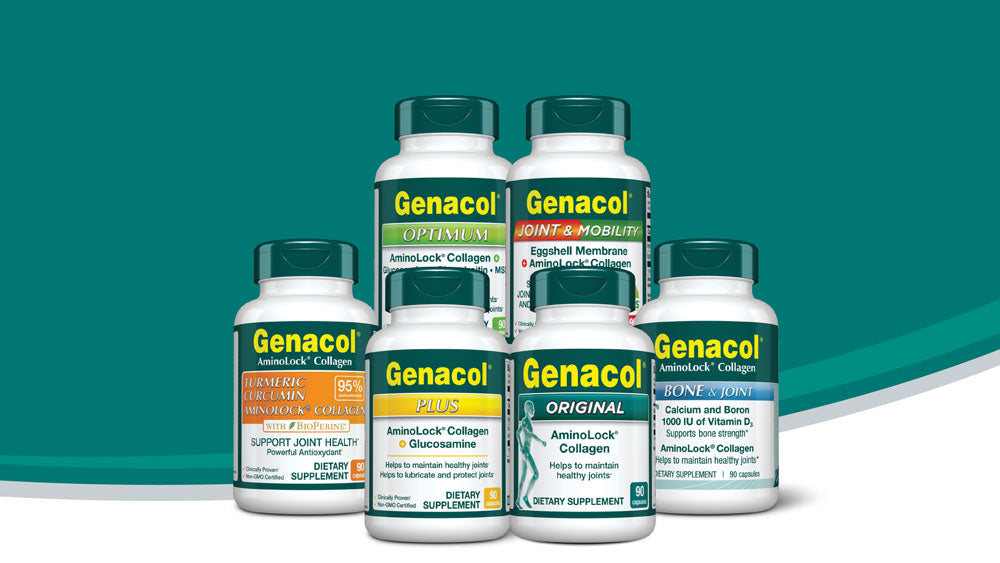

Collagen has become a popular supplement, especially for supporting joint, skin, and connective tissue health. However, not all collagen is created equal in terms of absorption and quality. Genacol has developed AminoLock Collagen, a form of hydrolyzed collagen designed for optimal absorption. But is it truly well absorbed by the body? Scientific research conducted in partnership with McGill University provides clear answers to this question.
Understanding the Importance of Collagen Absorption
Collagen is an essential protein naturally found in the human body, particularly in joints, skin, and bones. As we age, our body’s natural collagen production decreases, which can lead to joint discomfort and reduced mobility. Collagen supplements are designed to support the body’s natural collagen levels. However, to be effective, the collagen we consume must be properly absorbed through the digestive system and reach the targeted tissues.
When collagen peptides reach these tissues, they can support the cells involved in collagen production, called chondrocytes. This helps to:
- Support the maintenance of the cartilage matrix
- Support joint lubrication
- Slow down cartilage degradation
Why Aren’t All Forms of Collagen Equal?
There are several types of collagen supplements available on the market. Some are minimally processed, others are hydrolyzed, but not always with rigorous standardization. What’s important to understand is that the size of collagen molecules directly affects their ability to be absorbed by the body. This is referred to as bioavailability.
Native collagen, meaning in its full, unbroken form, has a structure that’s too large to pass through the intestinal wall during digestion. Even some so-called “hydrolyzed” collagens don’t achieve a small enough molecular size to promote optimal absorption. On average, these products have a molecular weight of 3 to 5 kilodaltons (kDa).
The Genacol Difference
This is where Genacol’s AminoLock Collagen truly stands out. Through a patented sequential enzymatic hydrolysis process, Genacol produces collagen peptides with an ultra-low molecular weight—under 1 kDa. This very small size allows for easier absorption through the intestinal wall during digestion and more efficient metabolization by the liver. The result? A greater potential for bioavailability within the body.
Research from McGill University: Demonstrated Superior Bioavailability
In collaboration with Dr. Stan Kubow’s team from the School of Human Nutrition at McGill University, Genacol conducted research to evaluate the bioavailability of AminoLock Collagen. The studies compared the absorption of specific peptides from AminoLock Collagen versus a generic hydrolyzed collagen.
The results showed that several bioactive peptides—such as Pro-Hyp, Gly-Pro, Hyp-Gly, Ala-Hyp, and Gly-Pro-Hyp—are better absorbed and metabolized when sourced from AminoLock Collagen. Notably, the peptide Gly-Pro-Hyp, which is recognized for its benefits to joint health, was only absorbed and detected in the systemic circulation when derived from AminoLock Collagen—not from generic collagen.
This All Sounds Very Scientific… So Let’s Make It More Concrete!
Watch this simple, visual demonstration by Christina, our Director of Research and Development, who clearly shows how AminoLock Collagen stands out when it comes to absorption.
Clinical Studies Demonstrate the Benefits of AminoLock Collagen
The effectiveness of AminoLock Collagen doesn’t rest on theory alone—it has been demonstrated in several rigorous clinical studies involving individuals experiencing joint stiffness or discomfort. Here’s an overview of the findings:
Bruyère Study (2012) – Effectiveness on Joint Discomfort
In a six-month study, participants who took Genacol AminoLock Collagen reported noticeable improvements in joint comfort and mobility compared to baseline observations.
Parm Study (2012) – Improving Joint Space
After six months of treatment, the results of this clinical study indicate that Genacol AminoLock Collagen may not only reduce discomfort and improve knee function but also may help maintain joint space and support knee function.
Suarez Study (2016) – Combined with exercise
Our clinical team observed that Genacol AminoLock Collagen, when combined with an exercise program, helped support joint comfort and mobility while promoting overall functional well-being. Improvements were also noted in joint structures, including better cartilage integrity and smoother joint movement in participants experiencing knee discomfort.
The findings from these studies indicate that AminoLock Collagen is well absorbed and supports joint comfort and mobility.
A Natural Product with No Reported Side Effects
AminoLock Collagen is made from bovine-sourced collagen, without artificial preservatives, gluten, or GMOs. Clinical studies have reported no significant side effects, making it safe for long-term daily use. Its safety profile makes it a great option for people looking to add an effective supplement to their routine, without the risk of unwanted interactions or digestive issues.
Overall, research conducted in partnership with McGill University and independent clinical studies demonstrate that Genacol’s AminoLock Collagen helps support joint comfort and mobility, contributing to overall joint health.