
We often hear about the benefits associated with antioxidants. The antioxidant properties of certain foods are also highlighted on the labels of products we find in grocery stores. Are these claims used for marketing purposes, or do antioxidants actually have a beneficial effect on our health?
Oxidative stress and free radicals
As their name suggests, antioxidants are associated with properties that help protect the body’s cells against oxidation. The oxidation process within our body is similar to rust on metal. Indeed, when in contact with oxygen, the atoms that make up our body’s cells undergo changes. Due to these changes, oxygen becomes unstable, causing the elements it comes into contact with to decompose, which can lead to biological damage. These unstable atoms, which initiate the oxidation process, are called free radicals. The formation of free radicals is a normal process during cellular metabolism, which enables cells to function, grow, and reproduce.
When free radicals attack a cell, it is said to be under oxidative stress. The latter is associated with cellular aging, which is a normal process as we age, but can be accelerated by excessive exposure to free radicals. It is believed that this premature aging of cells may be associated with the development of diseases, particularly cardiovascular diseases or certain forms of cancer.
The protective effect of antioxidants
Although the presence of free radicals in our body is entirely normal, our modern lifestyle means that our body is increasingly exposed to them.
Several external factors can increase the quantity of free radicals in our body. These include exposure to pollution and chemicals, such as those in cleaning products. The same is true for additives and preservatives found in many processed or ultra-processed food products. Smoking, alcohol consumption and exposure to UV rays are also external factors that increase the level of free radicals in the body.
Thus, the consumption of antioxidants is intended to maintain balance and avoid the oxidative stress caused by high exposure to free radicals. It is believed that when there is an imbalance, these can contribute to the appearance of diseases in the longer term.
What are the sources of antioxidants?
As you may have guessed, it is important to eat foods that are good sources of antioxidants to prevent the effects of oxidative stress. In this sense, here are the greatest sources of antioxidants and the foods that contain them.
Vitamin C : An antioxidant vitamin par excellence, it contributes to normal immune function. It is mainly found in fruits and vegetables, such as citrus fruits, mangoes, strawberries, peppers, broccoli, etc.
Vitamin A : Also known as beta-carotene, this vitamin plays a role in maintaining normal vision and overall wellness. It is found in carrots, pumpkin, squash, spinach, but also in beef liver.
Vitamin E : This vitamin contributes to the protection of cells from oxidative stress. It is found in seeds and nuts, such as almonds, in salmon, and in some whole grains.
Certain minerals : Zinc promotes the elimination of excess free radicals, while selenium helps the absorption of many vitamins. These minerals are mainly found in meats, organ meats, seafood and some fatty fish.
Polyphenols : Commonly found in the plant kingdom, they help protect cells from oxidative stress. Tannins, found in coffee, tea, cocoa and red wine, are a good example of polyphenols.
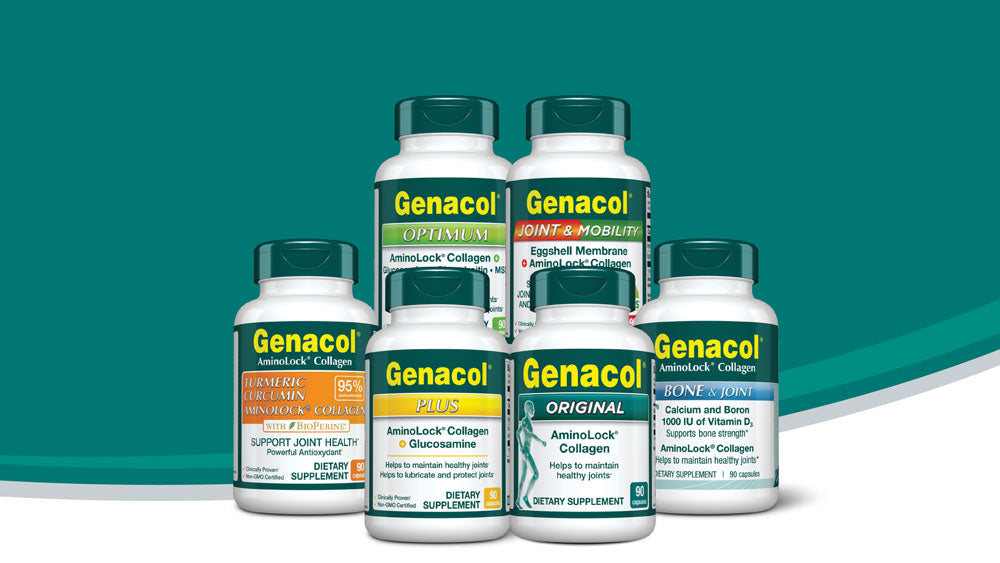
Genacol Turmeric Curcumin
In addition to our AminoLock Collagen, Genacol Turmeric Curcumin contains turmeric curcumin standardized to 95% curcuminoids, supporting overall wellness and joint comfort.
Turmeric has been valued for generations for its health benefits, largely due to curcumin, its primary active compound. It is traditionally used in herbal practices to support overall well-being and joint comfort. These benefits are made possible by Curcumin, its active ingredient. However, to maximize the assimilation of Curcumin, which is difficult for our bodies to absorb alone, Genacol Turmeric Curcumin also contains BioPerine, a patented black pepper extract.
Because curcumin on its own is difficult for the body to absorb, Genacol Turmeric Curcumin also includes BioPerine®, a black pepper extract known to help support curcumin absorption.
Thanks to this unique formulation, you can benefit from the antioxidant properties of Turmeric Curcumin and support joint comfort and mobility as part of your daily routine.